

Table of Contents
- Understanding Myopia
- Importance of Early Detection
- Lifestyle Modifications
- Optical Interventions
- Pharmacological Treatments
- Emerging Technologies
- Role of Education and Awareness
- Conclusion
Myopia, also known as nearsightedness, is a growing concern among children worldwide. The increasing rates of this condition underscore the importance of early intervention and effective management to protect children’s long-term vision health. Parents in communities such as Lower Sackville are increasingly turning to specialized clinics like dream lens Lower Sackville, which offer personalized solutions and cutting-edge myopia management programs. This comprehensive guide outlines the most effective, evidence-based strategies for slowing myopia progression in children, emphasizing proactive, multifaceted approaches. Understanding myopia, timely detection, practical lifestyle adjustments, advances in optical and pharmacological treatments, and the expansion of educational efforts together form a robust defense against worsening vision.
Understanding Myopia
Myopia occurs when the eye grows too long from front to back, causing distant objects to appear blurry while nearby objects remain clear. This refractive error usually begins in childhood and can progress into the teenage years. Today’s modern lifestyles—marked by increased screen time, extensive close-up work, and limited exposure to outdoor natural light—contribute significantly to the rising prevalence of myopia among children. Recent research indicates that about one in three young people is affected, and this trend continues to grow worldwide.
Importance of Early Detection
Detection of myopia at its earliest stage gives children the best chance for effective management. Routine eye exams, ideally starting before school age and continuing annually, can detect myopia, even when it is subtle or symptom-free. By identifying myopia early, parents and practitioners can introduce timely interventions that not only correct vision but also aim to halt or slow the underlying elongation of the eye. This proactive approach minimizes the risk of developing high myopia, which is associated with long-term complications such as retinal detachment, glaucoma, and macular degeneration.
Lifestyle Modifications
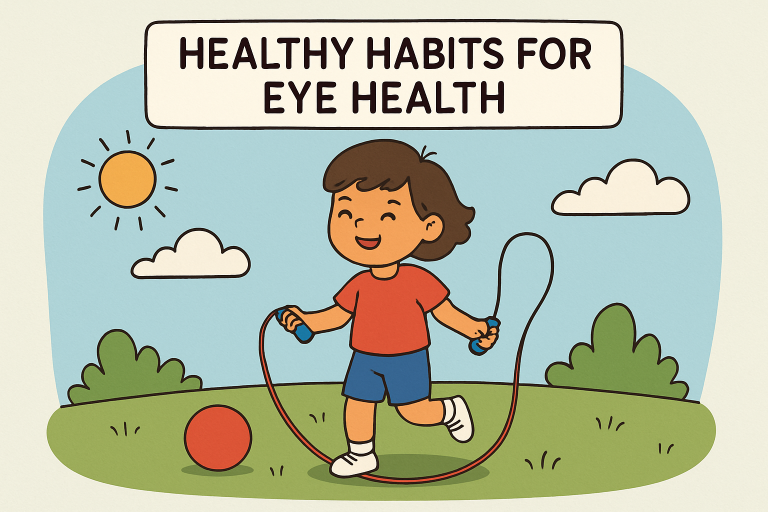
Environmental and behavioral changes are among the most accessible and impactful tools available to families. Encouraging children to spend at least two hours daily outdoors is now a cornerstone recommendation, as natural daylight is believed to help regulate healthy eye growth. In addition, balancing screen time and implementing the 20-20-20 rule—looking up every 20 minutes at something 20 feet away for at least 20 seconds—helps protect against eye strain and the potential worsening of myopia. Studies, such as those highlighted by Time Magazine, confirm the benefit of outdoor activity in reducing the incidence and progression of myopia in school-aged children.
Optical Interventions
Specialized Eyeglass Lenses
In recent years, innovative eyeglass lenses explicitly designed to slow myopia progression have garnered attention. These lenses feature concentric rings or other optical designs that alter how light focuses on the retina, helping to slow the eye’s elongation. The U.S. Food and Drug Administration (FDA) has approved certain types for children ages six to twelve, marking a significant advancement over traditional single-vision lenses. For more information, refer to this Associated Press article.
Contact Lenses for Myopia Control
Specialized soft multifocal contact lenses and orthokeratology (ortho-k) lenses are also effective options. Ortho-k lenses are worn overnight to gently reshape the front surface of the cornea, temporarily correcting vision and slowing progression. These interventions require a professional fitting and regular follow-ups, but can deliver outstanding results when used consistently.
Pharmacological Treatments
Low-dose atropine eye drops, while still under active investigation and not yet formally approved in all regions, have demonstrated meaningful success in many clinical trials. When used under medical supervision, these drops can reduce the rate at which children’s myopia worsens. Parents interested in this approach should consult their pediatric optometrist or ophthalmologist to discuss current research and eligibility.
Emerging Technologies
The field of myopia management is rapidly evolving, with ongoing clinical trials and technological innovations offering new hope for families. New generations of diagnostic tools, digital devices to personalize risk assessment, and advanced contact lens materials could further optimize results and comfort for children.
Role of Education and Awareness
Empowering parents and children with practical knowledge about myopia and the importance of early, regular eye examinations is essential. Eye care professionals, schools, and public health organizations play a vital role in raising awareness, distributing up-to-date recommendations, and advocating for supportive policies that encourage healthy visual habits among youth. Community-based campaigns and resources can facilitate timely access to care and encourage lasting changes in behavior around screen usage, outdoor time, and proactive eye health.
Conclusion
Myopia in childhood is a complex but manageable challenge. Strategic intervention through environmental adjustments, advanced optical products, pharmacological aids, and informed education can effectively slow its progression. Early detection and a customized, well-monitored care plan are the foundation for preserving vision and ensuring the healthiest future possible for children at risk of nearsightedness.
