

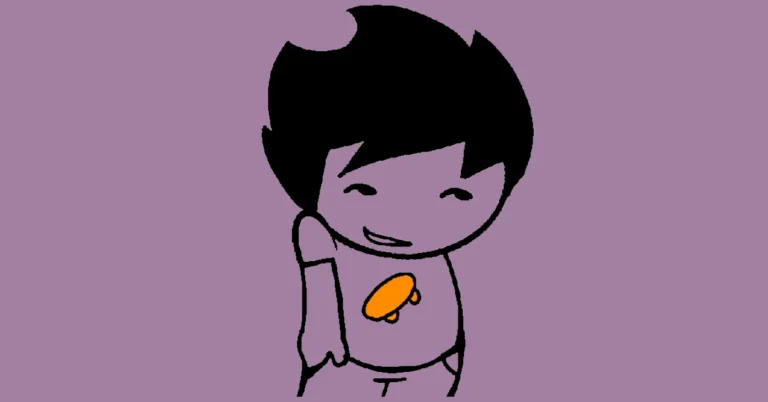
If you’ve spent any amount of time in the Homestuck or MSPFA fandom spaces, you’ve almost certainly seen the phrase: MSPFA is literally just Homestuck. It’s said jokingly, critically, defensively, lovingly—and sometimes all at once. Years after Homestuck’s peak popularity, fans are still arguing, analyzing, remixing, and resurrecting its DNA through MSPFA (MS Paint Fan Adventures).
But why? Why can’t fans let it go? Why does MSPFA feel so inseparable from Homestuck, even when creators insist they’re doing something new? And why does this comparison spark such strong emotions on both sides?
This article dives deep into the cultural, creative, and emotional reasons behind the claim that MSPFA is literally just Homestuck, unpacking why the comparison persists and what it reveals about fandom, nostalgia, and participatory storytelling.
ALSO READ: Frat Scavenger Hunt Ideas To Boost Brotherhood And Chaos
What Is MSPFA? A Quick Overview
MSPFA stands for MS Paint Fan Adventures, a platform inspired by Andrew Hussie’s original MS Paint Adventures format. It allows fans to create interactive, reader-influenced stories using simple art, command-based progression, and web-based updates.
While MSPFA technically supports any kind of story, its identity is heavily shaped by Homestuck’s legacy. The structure, humor, visual language, and even audience expectations often mirror the original comic.
In theory, MSPFA is a sandbox.
In practice, it’s a Homestuck-shaped sandbox.
Homestuck Shadow: Too Big To Escape
Homestuck Wasn’t Just a Comic—It Was a System
Homestuck wasn’t simply a popular webcomic. It was a format, a language, and a culture. It introduced:
- Command-driven storytelling
- Long-form, meta-heavy narratives
- Absurdist humor mixed with emotional depth
- Direct audience participation
- A loose, chaotic update schedule
When Homestuck ended, that system didn’t disappear. Fans had learned how to think in Homestuck terms. MSPFA became the natural place to keep using that mental toolkit.
So when people say MSPFA is literally just Homestuck, what they often mean is:
It operates on the same storytelling operating system.
Why MSPFA Feels Like Homestuck (Even When It Tries Not To)
The Structure Is Almost Identical
Most MSPFA stories follow a familiar pattern:
- Characters wake up in a room
- Readers submit commands
- The story escalates into chaos
- Lore becomes increasingly complicated
- Meta-humor breaks the fourth wall
This isn’t accidental. It’s how Homestuck taught people to tell stories in this medium. Even when creators attempt something original, they’re still using Homestuck’s bones.
The Art Style Signals Homestuck Instantly
Simple sprites. Flat colors. MS Paint aesthetics. Panels that feel deliberately crude.
These visual choices are more than convenience—they’re cultural signals. The moment a reader sees that style, their brain goes: Oh, this is Homestuck-adjacent.
Even original MSPFA works inherit that visual shorthand, making them feel like extensions of the same universe, whether they want to or not.
The Role Of Nostalgia: Fans Aren’t Ready To Move On
Homestuck Was a Defining Experience
For many fans, Homestuck wasn’t just a story—it was a phase of life. It was tied to friendships, identity exploration, internet culture, and growing up online.
MSPFA offers a way to revisit that feeling without replaying the exact same story. It’s comfort food for a fandom that doesn’t want closure.
That’s a big reason why fans can’t let it go:
Letting go of Homestuck feels like letting go of a part of themselves.
MSPFA As Collective Fan Therapy
Homestuck’s ending was controversial. Many fans felt unsatisfied, confused, or outright betrayed. MSPFA became a space to:
- Rewrite endings
- Explore what if scenarios
- Fix perceived narrative mistakes
- Create the Homestuck they wanted
From that perspective, MSPFA isn’t just imitation—it’s processing. It’s fandom working through unresolved emotions.
And when so many stories are responding to Homestuck, it’s hard not to see MSPFA as an extension of it.
Literally Just Homestuck As A Criticism
Not everyone means the phrase kindly.
The Critique: Lack of Originality
Some critics argue that MSPFA is creatively stagnant—that too many stories:
- Recycle the same tropes
- Reuse Homestuck-style humor
- Rely too heavily on familiar mechanics
From this angle, MSPFA is literally just Homestuck becomes a complaint about missed potential. The platform could host wildly different stories, but fandom gravity keeps pulling it back to the same source.
Literally Just Homestuck As A Compliment
On the flip side, many fans say it with affection.
The Praise: That’s the Point
For supporters, MSPFA being just Homestuck is a feature, not a flaw. They want:
- That specific brand of chaos
- That balance of irony and sincerity
- That feeling of discovering something weird at 3 a.m.
In this view, MSPFA is preserving a storytelling tradition that no longer exists anywhere else.
The Audience Shapes The Content
Readers Expect Homestuck Vibes
Creators don’t work in a vacuum. MSPFA audiences often:
- Submit Homestuck-style commands
- Reference canon jokes
- Expect certain pacing and humor
If a creator deviates too far, engagement can drop. Over time, this reinforces Homestuck-like storytelling, even among creators who want to experiment.
So when fans say MSPFA can’t escape Homestuck, it’s not just about creators—it’s about collective expectation.
Can MSPFA Ever Fully Break Free?
Technically? Yes. Practically? Maybe Not.
There are MSPFA stories that push boundaries, experiment with tone, or reject Homestuck tropes entirely. But they’re often the exception rather than the rule.
Homestuck is the shared language that makes MSPFA accessible. Breaking away too far risks losing the audience that gives the platform life.
In that sense, MSPFA isn’t trapped—it’s choosing continuity over reinvention.
Why The Comparison Keeps Coming Back
The phrase MSPFA is literally just Homestuck keeps resurfacing because it touches on something true:
- MSPFA exists because of Homestuck
- Its community was built by Homestuck fans
- Its tools and norms were shaped by Homestuck
You can critique that, celebrate it, or joke about it—but you can’t ignore it.
Conclusion
So, is MSPFA literally just Homestuck?
Not exactly—but it’s also not something entirely separate.
MSPFA is best understood as Homestuck’s afterimage: a space where fans keep playing with the ideas, structures, and emotions that defined a generation of internet storytelling. Fans can’t let it go because MSPFA isn’t about copying—it’s about continuing a conversation that never felt finished.
As long as people still care about Homestuck, MSPFA will keep feeling like its echo. And maybe that’s okay. Some stories don’t need an ending—they just need new voices to keep them alive.
FAQs
What is MSPFA?
MSPFA, or MS Paint Fan Adventures, is a platform where fans create interactive, command-based web stories inspired by the original MS Paint Adventures format popularized by Homestuck.
Why do people say MSPFA is literally just Homestuck?
Because many MSPFA stories use similar structures, humor, art styles, and storytelling techniques that closely resemble Homestuck, making the influence impossible to ignore.
Is MSPFA unoriginal because of its Homestuck influence?
Not necessarily. While many stories borrow heavily from Homestuck, others use the format to explore new ideas, genres, and themes within a familiar framework.
Why can’t Homestuck fans move on?
For many fans, Homestuck was deeply tied to their identity and formative internet experiences. MSPFA offers a way to revisit that feeling without replaying the exact same story.
Will MSPFA ever become something completely different?
It’s possible, but as long as its community is largely made up of Homestuck fans, the platform will likely continue reflecting that legacy in some form.
ALSO READ: Why The Blessed Upgrade Scroll Changes Everything
