


Table of Contents
- Signs of Hidden Water Leaks
- Common Areas Prone to Leaks
- DIY Methods to Detect Leaks
- Tools and Technologies for Leak Detection
- Steps to Fix Detected Leaks
- Preventive Measures to Avoid Future Leaks
- When to Call a Professional
- Conclusion
Hidden water leaks can silently cause extensive damage to your home and property, often unnoticed for weeks or even months. Acting swiftly to detect and address these leaks is crucial not only for protecting your house but also for maintaining your peace of mind. In many situations, enlisting the help of a water leak repair near me service can save you time and prevent further complications.
Recognizing telltale signs of leaks, knowing where to look, and understanding the steps for both detection and repair empowers homeowners to stay ahead of costly repairs and potential health risks. In this guide, you will learn how to identify the most common symptoms, pinpoint the vulnerable areas in your home, and use both DIY and professional techniques to fix leaks effectively.
Uncovering hidden water leaks lets you take early action before water causes damage to your walls, floors, and foundation. Prompt repair is essential to safeguard your home’s structure and your family’s health, as leaks often lead to mold and mildew growth.
Modern technology has also made leak detection much easier, providing homeowners with simple tools to identify invisible leaks. By following the right steps, you can keep your living environment safe, stable, and free from hidden water hazards.
Signs of Hidden Water Leaks
Hidden water leaks often reveal themselves through subtle and sometimes puzzling signs. If you notice any of the following symptoms, a concealed leak may be to blame:
- Unexplained Increase in Water Bills: When your bill spikes while your water use remains constant, a leak could be the cause.
- Musty Odors and Mold Growth: Damp, persistent smells or patchy mold on walls and ceilings usually signal prolonged moisture from a hidden leak.
- Stains and Discoloration: Brown or yellow stains, along with discoloration on walls, ceilings, or floors, are common signs that water is accumulating out of sight.
- Warped or Buckling Floors: Floors that appear uneven or feel soft may be suffering from prolonged exposure to moisture.
- Sound of Running Water: If you hear trickling or dripping water even when fixtures are shut off, a hidden leak is likely.
According to Consumer Reports experts, advanced leak detectors can help confirm your suspicions and raise alerts before small leaks become disasters.
Common Areas Prone to Leaks
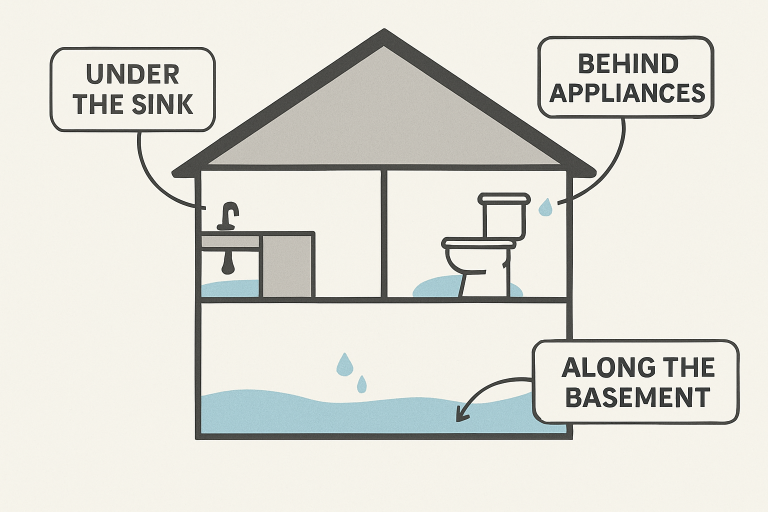
Some areas of the home are especially vulnerable to hidden plumbing leaks. Regularly inspect these locations for early warning signs:
- Underneath Sinks: Check where pipes connect and below basins for moisture, rust, or water rings.
- Behind Appliances: Appliances like dishwashers, refrigerators with ice makers, and washing machines often have hoses that can crack or loosen, causing leaks out of sight.
- Toilets: The area around the toilet base and the tank-to-bowl connection are common leak points.
- Basements and Crawl Spaces: Foundation cracks or old pipes in these areas are prime culprits for moisture accumulation and water seepage.
DIY Methods to Detect Leaks
There are several straightforward ways to assess your home for hidden leaks before calling a plumber:
- Water Meter Test: Shut off all water-using appliances and fixtures in your home, then observe your water meter. If the reading continues to change, a leak is highly probable.
- Toilet Dye Test: Place a few drops of food dye in your toilet tank. If color appears in the bowl after a few minutes without flushing, your toilet is leaking internally.
- Visual Inspection: Periodically walk through your home, especially near vulnerable spots, to look for water stains, swollen walls, or unusual dampness.
Tools and Technologies for Leak Detection
Homeowners have access to a range of tools that make leak detection simpler and more accurate:
- Water Leak Sensors: Affordable smart devices like the IKEA KLIPPBOK Water Leakage Sensor quickly alert you to water where it should not be, often via your smartphone.
- Infrared Cameras: By highlighting temperature differences, these cameras can spot hidden moisture behind walls and beneath floors.
- Moisture Meters: These hand-held tools help identify elevated moisture in wood, drywall, and other porous materials, making leak locations easier to confirm.
For a deeper understanding of how new technologies help prevent home water damage, reference the guidance from Consumer Reports.
Steps to Fix Detected Leaks
- Shut Off Water Supply: Immediately turn off the main water valve to stop ongoing damage when a hidden leak is located.
- Assess the Damage: Examine the surrounding area to understand the extent of water damage to floors, walls, pipes, or electrical systems.
- Perform Temporary Fixes: For minor leaks, plumber’s tape or a pipe clamp can offer a temporary solution until you undertake more permanent repairs or a professional arrives.
- Replace Faulty Components: Small parts, such as leaky washers, toilet flappers, or cracked hoses, are often easy to replace with minimal plumbing knowledge.
Preventive Measures to Avoid Future Leaks
- Regular Inspections: Set reminders to inspect pipes and appliances for corrosion, cracks, or loose connections at least twice a year.
- Maintain Gutters and Downspouts: Clean gutters regularly to prevent water from the outside from damaging your foundation or seeping indoors.
- Monitor Water Pressure: Install a pressure regulator if water pressure exceeds optimal levels, as high pressure can strain and eventually burst pipes.
- Install Leak Detection Systems: Use smart leak alarms and moisture sensors in high-risk areas to alert you to trouble at the earliest moment.
When to Call a Professional
Certain situations should be addressed by a licensed plumber or restoration specialist:
- Persistent Leaks: If you patch a leak but water keeps appearing, the problem may be deeper within the walls or under the floors.
- Extensive Water Damage: Major flooding, mold outbreaks, or any sign of serious deterioration requires prompt professional restoration to avoid long-term harm.
- Uncertain Leak Source: If you cannot pinpoint the leak’s source, professionals have advanced equipment and expertise to diagnose and resolve the issue quickly.
Conclusion
Early identification and repair of hidden water leaks are essential for protecting your home from costly water damage and unhealthy living conditions. Stay vigilant for subtle signs, conduct regular inspections, and leverage modern leak detection technology. Combining proactive preventive measures with timely repairs ensures your home remains safe and sound for years to come.
