

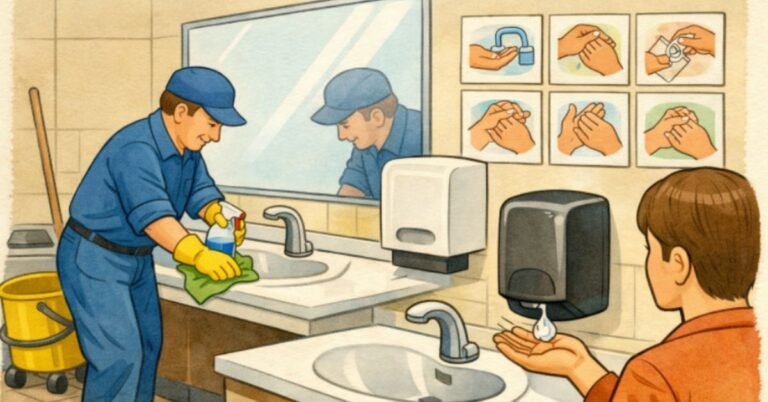
Maintaining high hygiene standards in public restrooms is crucial for public health and safety. With hundreds or even thousands of people passing through a single restroom daily, effective strategies are necessary to reduce the spread of germs and enhance the user experience. Innovations like touchless fixtures, efficient layouts, and responsible cleaning regimens can make public restrooms safer for everyone. By integrating technologies such as U-flow, public spaces can limit the number of contaminated surfaces and encourage hands-free hygiene habits.
Risk factors in restrooms include high-touch surfaces, intermittent stocking of hygiene supplies, and poorly maintained facilities. Addressing these common issues with a comprehensive approach leads to cleaner restrooms and improved overall well-being for users and facility staff alike.
Regular and Thorough Cleaning
Adhering to a strict and frequent cleaning schedule is the backbone of restroom hygiene. High-traffic restrooms require particular attention with multiple cleanings per day, especially during peak hours. High-touch surfaces such as handles, faucets, and dispensers should be disinfected often to minimize germ transmission. Utilizing advanced cleaning equipment, such as high-pressure cleaners and vacuum extraction tools, enables deep cleaning in hard-to-reach areas. The Centers for Disease Control and Prevention (CDC) recommends using EPA-registered disinfectants on high-touch surfaces and developing protocols that guarantee thoroughness and consistency.
Implementing Touchless Fixtures
Touchless technology can drastically cut down the risk of disease spread in public restrooms. Automatic soap dispensers, faucets, and hand dryers enable users to wash and dry their hands without touching shared surfaces, making the facility safer for everyone. Using touchless dispensers reduces the buildup of bacteria and viruses associated with manual handles and push buttons. Facilities that invest in touchless technology not only reduce cleaning burdens but also promote confidence among restroom users. Peer-reviewed studies highlight that public perceptions of cleanliness often improve when touchless features are present.
Ensuring Proper Handwashing Facilities
Providing every handwashing station with adequate soap, warm water, and paper towels, or efficient dryers, is fundamental. Research shows that drying hands with paper towels effectively removes more bacteria than most air-drying methods. Ensuring the constant availability of these supplies is critical because when resources run out, restroom users may skip essential hygiene steps. Facility managers should schedule regular restocking to ensure soap, towels, and tissues are replenished, guaranteeing an uninterrupted hygiene experience for all visitors. According to The New York Times, handwashing with soap is one of the most reliable ways to mitigate bacterial and viral transmission.
Providing Clear Signage and Education
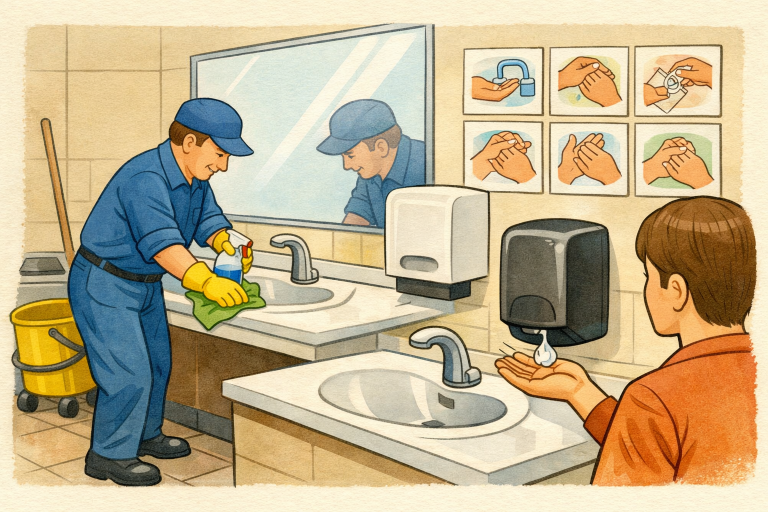
Signage plays a key role in prompting good hygiene behavior in public restrooms. Clear instructions near sinks can remind users of proper handwashing techniques, such as lathering with soap for at least 20 seconds, scrubbing all surfaces of the hands, rinsing thoroughly, and drying with a clean towel or dryer. Well-designed posters often lead to higher compliance rates. Educational signage can also encourage users to alert staff if hygiene supplies are running low or if a restroom needs attention.
Regular Maintenance and Supply Checks
Functionality and cleanliness go hand in hand. Regular inspections ensure that all fixtures, such as faucets and dryers, are working correctly and that supplies remain well-stocked. A breakdown or shortage often creates barriers to proper hygiene, and statistics show that supply shortages rank among the top complaints from restroom users. Implementing a system for ongoing inspection and rapid response to maintenance issues keeps restrooms accessible and clean at all times.
Addressing Air Quality and Ventilation
Airborne pathogens can linger after an infectious person has visited a restroom, especially in poorly ventilated environments. Good ventilation, achieved through exhaust fans or open windows, helps reduce airborne contaminant levels. The importance of effective air exchange has become even more evident since the COVID-19 pandemic. According to The Washington Post, contaminated air in enclosed restrooms poses health risks to subsequent visitors, underscoring the importance of effective ventilation for hygiene and comfort.
Designing for Accessibility and Inclusivity
Modern restroom design should include accessible features to accommodate users with disabilities or other special needs. This includes wider stalls, accessible sinks and dispensers, sturdy grab bars, and non-slip flooring. Inclusive restrooms support all users, regardless of age, mobility, or sensory sensitivity, and campaigns like Tork’s “paper towel plea” emphasize the importance of designing facilities that meet diverse requirements. Accessibility features also promote equal opportunities for hygiene, empowering everyone to maintain their health and dignity.
Monitoring and Feedback
Real-time feedback solutions, such as QR-coded surveys or dedicated helplines, enable restroom users to report problems or suggest improvements. Regular audits informed by user feedback contribute to better cleanliness and service. Studies have demonstrated that public satisfaction with restroom hygiene is generally low; only one in five restrooms meets user expectations. However, active engagement and prompt responses help raise the standard and perception of public toilet facilities.
By adopting these best practices, facility managers can create cleaner, safer, and more welcoming public restrooms. Commitment to regular cleaning, touchless technology, well-maintained supplies, and responsive management significantly contributes to public health and user satisfaction.
