

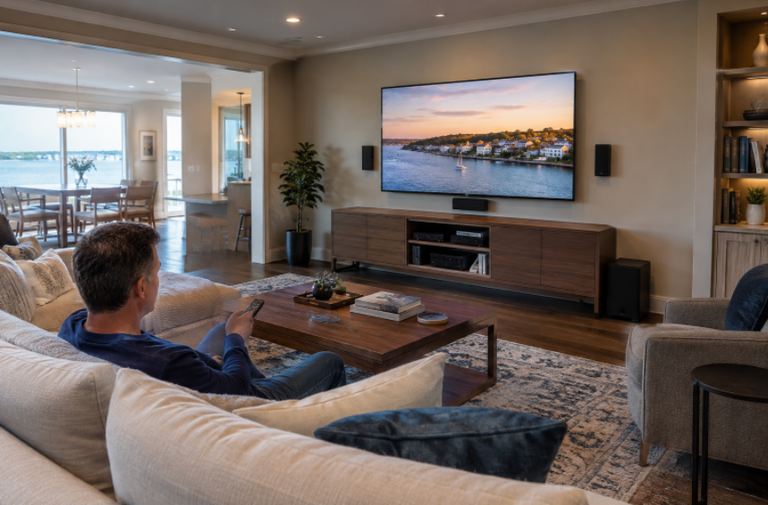
A home entertainment system should fit the way a household watches, listens, relaxes, and hosts guests. Yet many Stamford homeowners end up with excellent individual products that do not work especially well together. Sound Connections offers residential audiovisual design services Stamford, CT homeowners can explore when they want to coordinate sound, video, equipment placement, controls, and installation into one practical plan.
Whether the goal is a dedicated theater, a living-room upgrade, multiroom music, or a simpler streaming setup, residential AV design starts with the space itself. Screen size, seating distance, speaker locations, Wi-Fi coverage, cable paths, lighting, and everyday usability all shape the finished experience.
Why Residential Audiovisual Design Matters
A larger TV or more powerful speakers won’t automatically improve the entertainment experience. The screen may not suit the viewing distance, speakers may be poorly placed, and equipment can create clutter, messy cables, and too many remotes.
A thoughtful AV plan considers the room’s purpose, seating, sources, equipment storage, and controls before installation. This makes the system not just capable, but comfortable for everyday use.
Common Residential AV Problems Sound Connections Can Help Address
Hard-to-hear dialogue and uneven sound
Dialogue clarity depends on more than speaker quality. The room’s surfaces, furniture, seating position, and speaker placement can all affect what listeners hear. Sound Connections can discuss the room and intended listening areas before recommending an audio approach.
Too many remotes and disconnected apps
Televisions, streaming devices, receivers, game consoles, and cable boxes often arrive with separate controls. A coordinated system can make common activities, such as watching television or starting a movie, easier for everyone in the household.
Equipment that does not fit the room
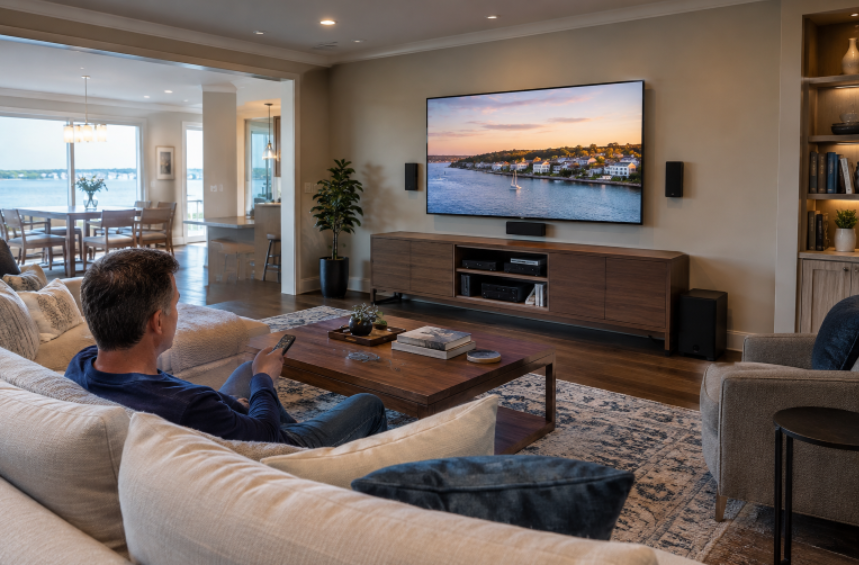
A projector is not automatically the right choice for every space, and neither is a soundbar or a full surround system. The best option depends on available wall space, ambient light, room layout, desired appearance, budget, and the types of content the household enjoys.
Cluttered wiring and difficult installation conditions
Wall mounting, equipment ventilation, concealed wiring, outlet locations, and network connections should be considered early. This is particularly important during a renovation or new construction project, when access behind walls and ceilings may be available.
How the Residential AV Design Process Works
A useful project conversation begins with goals rather than model numbers. A homeowner may want better sound for sports, a more immersive movie experience, reliable gaming connections, or music in several rooms. Those priorities guide the design.
- Define how the room will be used. Identify whether movies, television, gaming, music, entertaining, or a mix of activities matters most.
- Review the physical space. Consider room dimensions, seating, windows, lighting, furniture, wall construction, and possible equipment locations.
- Match the components. The plan displays, speakers, receivers, streaming sources, controls, wiring, and network requirements as compatible parts of a single system.
- Coordinate installation details. Address mounting, cable routing, equipment placement, ventilation, testing, and basic operation.
- Allow for future changes. Consider room additions, new devices, upgrades, or changes in household needs before finalizing installation decisions.
Home Theater Design for Dedicated and Multiuse Rooms
Not every home needs a separate cinema room. A basement may suit a larger screen and immersive speaker placement, while a living room may need discreet equipment that preserves its everyday use.
Flexibility matters: the Consumer Technology Association reported in a 2021 survey summary that 62 percent of U.S. home theaters were in living rooms or dens. These rooms often combine connected devices, making source selection, wiring, and simple controls essential.
TV-centered designs may focus on viewing distance, glare, and furniture-friendly audio. Projector rooms may require more attention to light control, screen and projector placement, and audio separation. Sound Connections helps homeowners weigh these tradeoffs instead of assuming one format fits all.
Why Room Acoustics Should Be Considered Before Buying Equipment
Room acoustics describes how sound behaves inside an enclosed space. Hard walls, floors, glass, ceiling height, room shape, and furnishings can influence reflections, reverberation, and low-frequency buildup. As an overview of how sound behaves in enclosed rooms explains, reflections and room dimensions can create audible effects that vary by frequency and listening location.
This does not mean every home needs extensive acoustic treatment. It does mean that speaker placement, seating position, rugs, curtains, and existing furnishings are worth discussing before assuming that a new component alone will correct a sound issue. A room-aware design helps establish realistic expectations for clarity, bass balance, and listening comfort.
Choosing Equipment That Supports the Goal
Equipment selection should follow the use case. A television may suit a bright family room and casual daily viewing. A projector and screen may fit a room intended primarily for movie nights. A soundbar can be a straightforward improvement where space and simplicity are priorities, while separate speakers may be appropriate for homeowners seeking more enveloping sound.
Other decisions include whether to retain current equipment, add a receiver or amplifier, connect gaming consoles and streaming devices, use in-wall or bookshelf speakers, and choose a control method. Sound Connections can help organize those choices into a system that makes sense for the room and the people using it.
What to Include in a Sound Connections Service Request
Providing clear information at the start can help focus the discussion. Include the Stamford property location, room type and approximate dimensions, primary goals, current equipment to keep or replace, desired timing, and a working budget range. It is also helpful to mention construction plans, known wiring limitations, network concerns, preferred display size, speaker preferences, and whether the need is a new installation, upgrade, or troubleshooting request.
DIY Setup or Professional AV Planning?
A DIY approach can work well for a simple television and streaming setup. Professional planning becomes especially useful when a project involves concealed wiring, several devices, multiple rooms, wall mounting, integrated controls, unusual room conditions, or a renovation schedule. The value is not simply in installing equipment. It is in connecting technical decisions to the way the home is actually used.
Make the Home Entertainment Experience Easier
For Stamford homeowners, Sound Connections offers a practical starting point for planning a residential AV system around the room, the equipment, and the household. A clear design process can reduce guesswork, limit mismatched purchases, and create an entertainment space that is easier to enjoy now and adapt later.
