

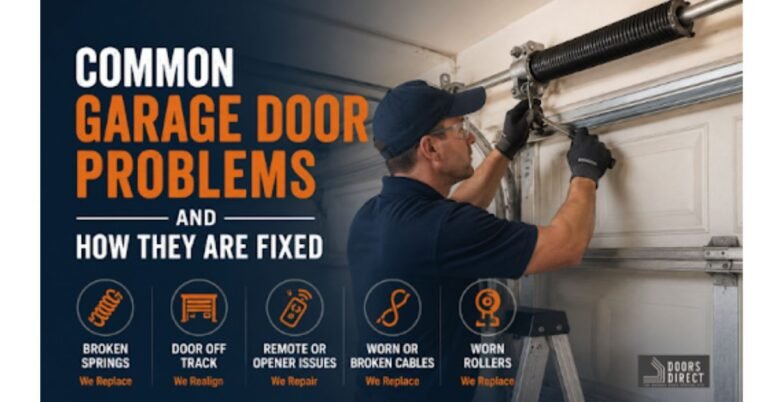
Has your garage door started making a strange noise lately? Maybe it jerks halfway up, or the remote only works on the third try. We know these signs are easy to brush off, but they usually point to something concerning.
And that uncertainty is what worries most homeowners: a door that breaks without warning, a surprise repair bill, or a spring that snaps while someone is nearby. Here at Doors Direct, our QBCC-licensed team has helped dozens of Brisbane homeowners sort out these garage door issues since 2008.
The trouble is, your small garage door problems can grow fast. Gradual strains to the opener motor, for instance, can become a door that won’t move at all.
So in this article, we’ll cover the most common door issues, what causes them, and the repair solutions that prevent further damage.
Garage Door Broken Springs and Track Issues: What You Need to Know
Broken springs and door track problems are two of the most common garage door issues, and both carry major safety risks. Here’s how to spot them early and what you can do about each one.
What Broken Springs Actually Do
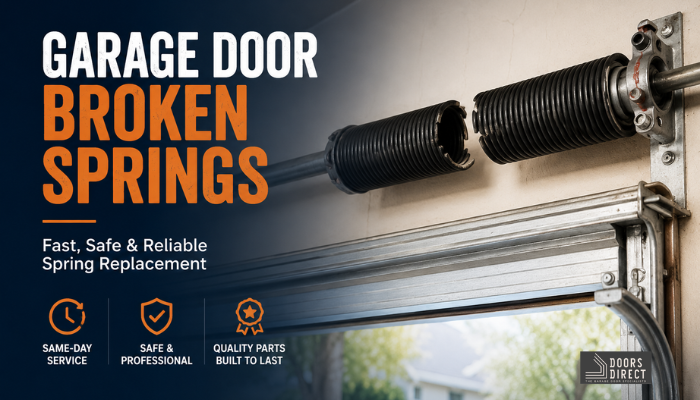
Your garage door springs carry the full weight of the door every time it opens or closes. Most residential doors weigh well over 100 kilograms, so if a spring snaps, all of that weight drops with nothing to support it.
That’s when you’ll hear a loud bang from the garage, or notice the door sitting crooked on one side. Your opener might also start struggling to lift the door, and if you look closely, you may spot a visible gap in the spring coils.
Signs Your Door Track Needs Repair
Now, track problems can be just as disruptive as broken springs, and they tend to get worse the longer you leave them. These are the signs to keep an ear and eye out for:
- Scraping Noises: This usually means the rollers are grinding against bent or misaligned sections of the track.
- Gaps Around the Door: If the door no longer sits flush against the frame when closed, the tracks may have shifted.
- Rollers Slipping: Debris or rust in the track can cause the door to jump out of position during movement. In some cases, it can wear out the rollers and cause the door to move unevenly.
- Door Leaning: If one side of the door drops lower than the other while opening, the track on that side likely needs realignment. This can put extra strain on the opener and other parts, which may lead to bigger damage over time.
- Shaking During Movement: Loose hardware can vibrate the track as the door travels up and down. That shaking often points to bolts, brackets, or fasteners that need tightening before the issue gets worse.
If any of these show up, the track needs attention before the problem reaches other moving parts of the system.
Safe DIY Checks vs. Professional Repairs
Some basic checks are safe enough for you to handle at home. For instance, you can:
- Inspect the tracks for dents or rust.
- Clear out any built-up debris.
- Lubricate rollers with a silicone spray.
- Tighten any obviously loose hardware.
However, anything beyond that should go to a qualified technician. This includes spring replacement, cable repairs, track realignment, and motor work, all of which involve high-tension parts.
Based on our experience, trying to fix these yourself usually costs more in the long run and puts you at major risk of injury.
Maintenance Tips and Smart Repair Solutions to Prevent Bigger Problems
Regular maintenance and timely repair are the easiest ways to keep your garage door running smoothly and avoid expensive surprises. Let’s look at what you can do at home, and what the latest technology offers to help.
Simple Maintenance Habits That Extend Garage Door Life
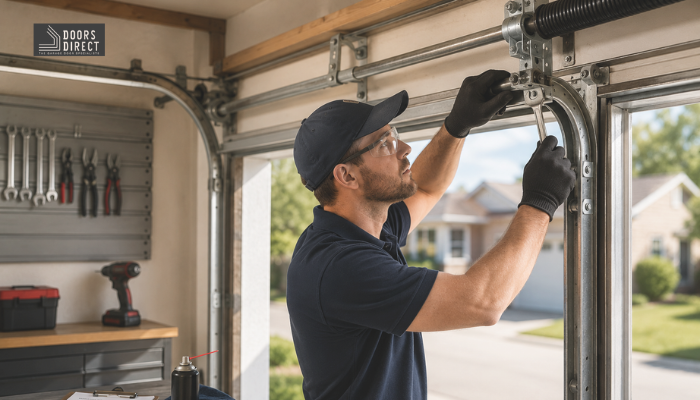
A few simple habits can go a long way in preventing garage door problems before they get out of hand. These are the ones worth building into your routine:
Lubricate Rollers and Hinges
Applying a silicone-based lubricant to the rollers and hinges every few months can improve how smoothly the door moves. It keeps friction low, reduces noise, and helps the door glide along the track without grinding.
Inspect Safety Sensors Monthly
Your safety sensors are located at the base of the door and prevent it from closing on people or objects. Because they sit low to the ground, even small issues like a bump, dirt, or cobwebs can affect how they work. That’s why we recommend checking them once a month to make sure they stay clean and aligned.
Clean Tracks Regularly
Debris, dried grease, and rust sometimes build up inside the tracks. A wipe down every couple of months is all it takes to keep the rollers moving the way they should.
Check Remote Batteries
Low remote batteries are one of those things you don’t think about until the opener stops responding. Swapping them out as soon as you notice the signal getting weaker or less responsive will help you avoid getting stuck outside the garage.
Test Opener Responsiveness
Every now and then, open and close the door a few times and just listen. Delays, grinding, or hesitation can all point to early motor or sensor faults that are much cheaper to fix before they get worse.
Watch for Worn Hardware
Finally, bolts, brackets, and hinges can loosen up over time without any obvious signs. A quick check once or twice a year, and tightening anything that’s come loose, keeps the door aligned and takes strain off other moving parts.
Why Preventive Maintenance Saves Money
Keeping up with basic maintenance means fewer emergency call-outs and lower repair bills over time. For example, small problems like worn rollers or dry hinges are cheap to fix early on, but they lead to significant damage if you let them go.
On top of that, regular care extends the life of your opener motor. When the door moves smoothly, the motor does not need to work as hard (which reduces wear over time). As a result, it is less likely to break down suddenly.
From our experience, we’ve seen homeowners save hundreds of dollars simply by following a basic servicing routine.
Smart Technology Is Changing Garage Door Diagnostics
The way homeowners troubleshoot garage door problems is changing quickly. Much like how vehicle diagnostics tools help pinpoint exact issues in cars, newer opener systems now bring a similar approach to your garage.
Merlin’s myQ technology is a good example of this in action. The free app connects to compatible Merlin openers and gives you real-time alerts when something goes wrong.
With one tap, you can check the status of your door, receive maintenance reminders, and even share a diagnostics report with your technician. This helps them identify the primary faulty part before they arrive.
So, instead of waiting for a full breakdown, you get more insight into motor, sensor, and safety issues early on. And that means faster repairs and fewer surprise bills down the line.
Repair Fast to Keep Your Garage Door Safe and Reliable
So, did any of those garage door issues sound familiar? Fortunately, most of these problems start small, and they’re usually fixable before they get out of hand.
A bit of routine care goes a long way here. Simple maintenance tips like checking the opener, cleaning the tracks, and keeping an eye on worn parts can help you avoid emergency call-outs and unexpected repair bills.
That said, some jobs are best left to a professional.
So if you’re ready to hire or not sure where to start, the team at Doors Direct is always happy to help. Give us a call on 07 3161 5963.
