


Staying informed about Nevada’s car accident laws is not only necessary for compliance but also vital for protecting your rights and interests after a crash. Whether you’re a Nevada resident or just traveling through, understanding your duties and the state’s unique legal principles can help you avoid costly mistakes. For detailed legal guidance, consult blakefriedmanlaw.com for expert support on car accident claims in Nevada.
Nevada law takes a clear stance on responsibilities after an accident, insurance coverage, and when to involve law enforcement. Familiarizing yourself with these policies enables you to respond appropriately during a stressful situation, minimizing penalties and ensuring you receive what you’re entitled to under the law. Failing to meet your legal obligations can result in substantial fines or even criminal prosecution, so understanding these details well in advance of an accident is crucial.
Many drivers are caught off guard by how Nevada’s at-fault system and mandatory insurance minimums work. Even minor collisions or fender benders can lead to complex disputes when drivers are unprepared for the aftermath. For instance, leaving the scene or waiting too long to report an incident can escalate a routine crash into a criminal matter. In addition, you need to know how comparative negligence could impact your right to compensation.
Meeting state requirements upfront and reacting swiftly after an accident can drastically reduce your risks. This guide walks you through the essential Nevada car accident laws, your duties at the scene, reporting thresholds, insurance minimums, and the penalties for violating these rules.
At-Fault Insurance System
Nevada adheres to an at-fault or “tort” system for car accident claims. This means the party responsible for causing the crash, along with their insurance, is on the financial hook for resulting injuries and property damage. To recover damages, Nevada residents often file claims with the insurer of the other driver or pursue litigation if liability is disputed.
Fault must be established through police reports, witness statements, and evidence at the scene. Accurate documentation is critical, as even minor errors can impact your ability to obtain fair compensation for medical bills, property damage, and lost wages. According to Shouse Law Group’s guide on Nevada car accident laws, timely evidence collection is among the most critical steps following any collision.
Mandatory Insurance Requirements
All Nevada drivers are legally required to carry minimum liability car insurance, known as 25/50/20 coverage:
- $25,000 for bodily injury or death per person
- $50,000 for bodily injury or death per accident
- $20,000 for property damage per accident
Carrying only the minimum may cover minor claims but leaves you vulnerable to lawsuits in the event of a serious crash. Experts recommend considering higher coverage limits and additional protection, like uninsured/underinsured motorist coverage, for greater peace of mind. For more details, refer to Karns & Karns Personal Injury and Accident Attorneys’ overview of Nevada car accident laws.
Duties After an Accident
If you’re involved in a crash in Nevada, you have strict responsibilities:
- Stop Immediately: Never leave the scene. Move your vehicle out of traffic if it’s safe.
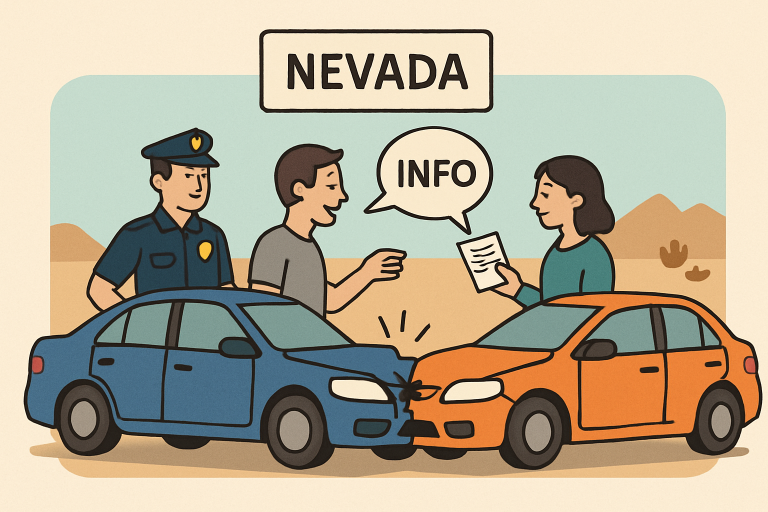
- Exchange Information: Share contact and insurance details with other drivers and affected parties.
- Assist the Injured: Render reasonable aid, including calling emergency services if necessary.
- Remain Calm and Cooperate: Stay at the scene until the officers instruct you to leave if law enforcement is present.
Failure to comply with these duties can result in fines, suspension of your driver’s license, and even jail time, depending on the accident’s severity. It’s also essential to remain cordial with other parties and avoid admitting fault while at the scene, as this can be used against you during any subsequent claim. For more information, see Shouse Law Group’s explanation of hit-and-run laws in Nevada.
Reporting Accidents
By law, you must report any accident that causes injury, death, or property damage exceeding $750 to the local police or the Nevada Highway Patrol. If law enforcement does not respond to the scene, you are required to file a report with the Nevada DMV within 10 days. Failure to report can lead to penalties or suspension of your driving privileges. This threshold is low, meaning most incidents will require reporting. Always err on the side of caution and report when in doubt. Accurate and prompt reporting also supports your insurance claim and legal standing. For detailed reporting requirements, consult the Nevada DMV’s traffic laws and safety page.
Hit-and-Run Penalties
Leaving the scene of an accident in Nevada is a criminal offense, escalating depending on the severity of the crash:
- For property damage only, offenders face misdemeanor charges, potential jail time of up to six months, and fines up to $1,000.
- If injuries or fatalities are involved, penalties increase to Category B felony charges, with imprisonment ranging from 2 to 20 years, and fines between $2,000 and $5,000.
These severe consequences underscore the importance of drivers always remaining at the scene and fulfilling all post-accident obligations. More information is available at Shouse Law Group’s overview of hit-and-run laws in Nevada.
Comparative Negligence Rule
Nevada’s modified comparative negligence law means you can still receive compensation after an accident—even if you are partly to blame. However, if you are found to be 51% or more at fault, you lose your right to recover any damages. Compensation is adjusted by your degree of fault; for example, if determined to be 30% at fault, your settlement or award is reduced by that amount. This legal standard can make complex cases even more challenging, particularly in cases involving multiple vehicles. Insurers regularly dispute fault percentages to minimize payouts; therefore, having corroborating evidence and, when necessary, legal counsel is vital. For more on comparative fault rules, see Nolo’s guide to Nevada car accident laws.
Statute of Limitations
Personal injury and property damage claims stemming from car accidents in Nevada are subject to a statute of limitations. Injured parties have two years from the date of the accident to file a lawsuit. After this period, the claim is typically barred, no matter the circumstances. Don’t delay action—gather necessary documentation and consult an attorney early to protect your claim.
Move Over Law
The Move Over Law is designed to protect emergency responders and those involved in roadside incidents. When approaching a stationary emergency vehicle or traffic incident, drivers must:
- Slow down to a safe speed below the posted limit
- Move into a non-adjacent lane if safe and possible
- Be prepared to stop completely, if necessary
This law applies to police, fire, medical vehicles, and tow trucks, and violations can result in fines and penalties. Responsible driving in these situations helps reduce the risk of secondary collisions and protects Nevada’s first responders. For up-to-date traffic statutes and driver resource materials, visit the official Nevada DMV website.
By understanding and adhering to these laws, drivers ensure not only legal compliance but also promote greater road safety and accountability for everyone in Nevada.
