

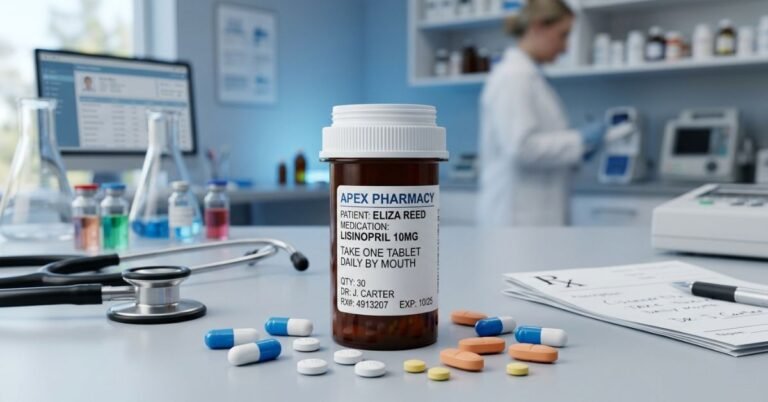
Most people handle a pill bottle without giving it a second thought.Open the cap. Take the medication. Put it away.Simple.Yet behind that familiar orange container is decades of engineering, healthcare regulation, child-safety innovation, and pharmaceutical science.
A pill bottle does far more than hold medicine. It protects medications from contamination, preserves effectiveness, communicates critical instructions, and helps prevent accidental poisoning.
Whether you’re a patient, caregiver, pharmacist, or simply curious about medication packaging, understanding how pill bottles work can help improve safety and medication management.
What Is a Pill Bottle?
A pill bottle is a specialized pharmaceutical container designed to store, protect, and dispense medications.
Most prescription bottles include:
- A container body
- Child-resistant closure
- Prescription label
- Dosage instructions
- Pharmacy information
- Medication identification details
Modern pill bottles are designed to balance convenience, safety, compliance, and medication preservation.
Why Pill Bottles Are Usually Orange or Amber
One of the most recognizable features of prescription bottles is their color.
Most pharmacies use amber-colored containers because they help block ultraviolet (UV) light.
Exposure to light can degrade certain medications and reduce effectiveness.
Benefits of Amber Bottles
- UV protection
- Medication stability
- Longer shelf life
- Reduced degradation
- Improved patient safety
Not every medication requires amber packaging, but many benefit from additional light protection.
The Anatomy of a Modern Pill Bottle
Visual Breakdown
| Component | Purpose |
|---|---|
| Bottle Body | Stores medication |
| Child-Resistant Cap | Prevents accidental access |
| Label | Provides medication instructions |
| Fill Line | Indicates capacity |
| Tamper-Evident Features | Improves security |
| Barcode | Supports pharmacy tracking |
Every element serves a specific safety or compliance function.
Common Pill Bottle Sizes
Pharmacies use various bottle sizes depending on prescription volume.
Standard Pill Bottle Size Chart
| Size | Approximate Capacity |
| 6 Dram | Small prescriptions |
| 8 Dram | Small-to-medium prescriptions |
| 13 Dram | Standard prescriptions |
| 20 Dram | Larger prescriptions |
| 30 Dram | Multi-month supplies |
| 40 Dram | High-volume prescriptions |
| 60 Dram | Bulk medication storage |
The appropriate size depends on pill dimensions and prescription quantity.
Understanding Child-Resistant Caps
One of the most important innovations in medication safety is the child-resistant cap.
These closures became widely adopted after regulations aimed at reducing accidental poisonings among children.
Common Child-Resistant Mechanisms
- Push-and-turn
- Squeeze-and-turn
- Align-and-turn
- Locking tabs
The goal is not to make bottles impossible to open.
The goal is to make them difficult for young children while remaining accessible to adults.
Why Pill Bottle Labels Matter
A prescription label contains essential healthcare information.
Typical label details include:
- Patient name
- Medication name
- Strength
- Dosage instructions
- Refill information
- Prescribing physician
- Pharmacy contact details
- Expiration information
Reading the label carefully helps reduce medication errors.
Proper Medication Storage Practices
Even the best pill bottle cannot protect medications if stored incorrectly.
Best Practices
Store medications:
In a cool location
Away from direct sunlight
Out of reach of children
In a dry environment
In original containers
Avoid storing medications:
In bathrooms
Near stoves
In vehicles
In humid environments
In unmarked containers
Heat and moisture can significantly reduce medication stability.
Types of Pill Bottles
Standard Prescription Bottles
Most commonly used by retail pharmacies.
Easy-Open Bottles
Designed for individuals with limited dexterity.
Unit Dose Containers
Frequently used in hospitals and healthcare facilities.
Travel Pill Bottles
Portable solutions for medication management while traveling.
Smart Pill Bottles
Technology-enabled containers that track usage and provide reminders.
Features may include:
- Mobile app integration
- Medication reminders
- Usage tracking
- Caregiver notifications
- Adherence monitoring
The Rise of Smart Pill Bottles
Healthcare technology is transforming medication management.
Smart pill bottles help address one of healthcare’s biggest challenges:
Medication adherence.
Patients often forget doses, skip medications, or take incorrect amounts.
Smart systems can:
- Send reminders
- Track compliance
- Alert caregivers
- Improve treatment outcomes
This category is expected to grow significantly as digital healthcare expands.
Pill Bottle Materials Explained
Most prescription bottles are made from:
HDPE (High-Density Polyethylene)
Benefits include:
- Lightweight
- Durable
- Moisture-resistant
- Cost-effective
PET Plastic
Benefits include:
- Clear visibility
- Strong structure
- Recyclability
Glass Bottles
Used primarily for:
- Specialty medications
- Certain liquid formulations
- Laboratory applications
Environmental Impact and Recycling
Millions of pill bottles are used every year.
Many patients wonder whether they can recycle them.
The answer depends on:
- Local recycling rules
- Bottle material
- Label removal requirements
Before Recycling
- Remove personal information
- Empty contents completely
- Follow local recycling guidelines
- Check accepted plastic types
Some organizations also offer pill bottle reuse programs.
Myth vs Fact
Myth:
All pill bottles are the same.
Fact:
Different medications require different bottle sizes, materials, closures, and storage conditions.
Myth:
Child-resistant caps are childproof.
Fact:
They reduce risk but do not guarantee complete protection.
Myth:
It’s safe to transfer medications into any container.
Fact:
Original containers provide labeling, safety information, and protection.
Myth:
Amber bottles are used only for appearance.
Fact:
Their primary purpose is protecting medications from UV exposure.
Pill Bottle Industry Statistics
Key Facts
- Millions of prescription bottles are dispensed daily worldwide.
- Medication non-adherence remains a major healthcare challenge.
- Child-resistant packaging has significantly reduced accidental poisoning incidents.
- Smart medication packaging continues to expand across healthcare systems.
[Source: FDA reports, healthcare packaging studies, pharmaceutical industry research, poison prevention organizations]
EEAT Section: Insights From Pharmacy and Packaging Professionals
One of the most common mistakes patients make is transferring medication into unlabeled containers for convenience.
Healthcare professionals consistently advise against this practice.
The original pill bottle provides more than storage. It contains critical information about dosage, expiration dates, refill instructions, and medication identification. Removing medications from their prescribed container increases the risk of confusion, dosing errors, and accidental misuse.
The safest place for prescription medication is usually the container supplied by the pharmacy.
Frequently Asked Questions
What is a pill bottle used for?
A pill bottle is designed to store, protect, identify, and dispense medications while helping maintain safety and effectiveness.
Why are prescription pill bottles orange?
Most pharmacies use amber-colored bottles because they help protect medications from ultraviolet light exposure that may reduce effectiveness.
Are child-resistant caps childproof?
No. They are designed to slow and discourage access by children but cannot guarantee complete prevention.
Can pill bottles be recycled?
Many can be recycled, but recycling rules vary by location. Always remove personal information and check local guidelines.
What are smart pill bottles?
Smart pill bottles use technology such as reminders, sensors, and mobile apps to help patients manage medication schedules and improve adherence.
Should medications stay in their original bottle?
In most situations, yes. Original containers provide safety information, proper labeling, and protection from environmental factors.
Final Thoughts
The humble pill bottle is one of healthcare’s most overlooked innovations.It combines pharmaceutical science, safety engineering, regulatory compliance, and patient education into a simple container that millions of people rely on every day.From amber prescription bottles and child-resistant caps to smart medication tracking systems, pill bottle technology continues evolving alongside modern healthcare. Understanding how these containers work can help improve medication safety, reduce errors, and support better health outcomes.
