

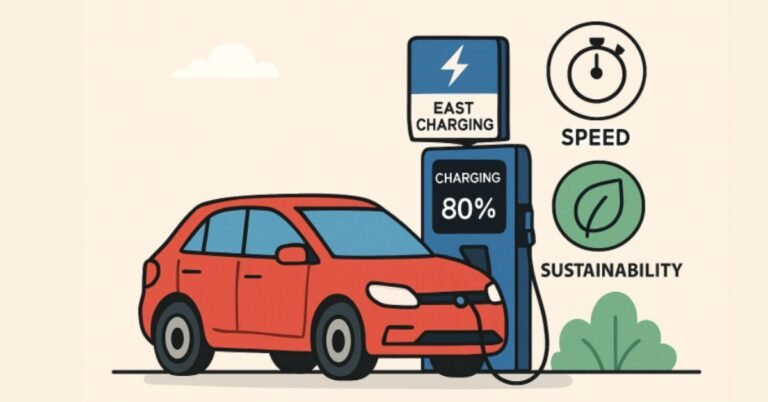
As electric vehicles (EVs) continue their rapid ascent in mainstream transportation, the need for rapid and reliable charging infrastructure is more urgent than ever. Fast charging technology stands at the forefront of this shift, transforming how drivers power their vehicles and shaping our approach to sustainable mobility. Leveraging a modern DC fast charger can help minimize downtime and make road trips in EVs as seamless as those in traditional gasoline-powered cars.
Innovations in charging speed, vehicle battery capacities, and public accessibility are converging to bring EV charging closer to the refueling experience long associated with gasoline or diesel. As battery technology improves and the supporting infrastructure expands, charging times are dropping and convenience is increasing, removing persistent barriers to EV adoption and ownership.
Today, leaders in the automotive and technology sectors are investing billions into both vehicle and charging advancements, joining forces to deploy vast networks of fast chargers across priority markets. This investment, alongside new efficiency standards and growing consumer expectations, is rapidly raising the bar for the entire EV industry.
Government policies and funding are accelerating the rollout of fast-charging stations and helping ensure that rural and underserved communities are not left behind in the electrification revolution. The combined power of public-private partnerships, new battery compositions, and a commitment to standardization promises a dramatic shift in how we think about vehicle charging and long-distance travel in the near future.
Advancements in Fast Charging Technology
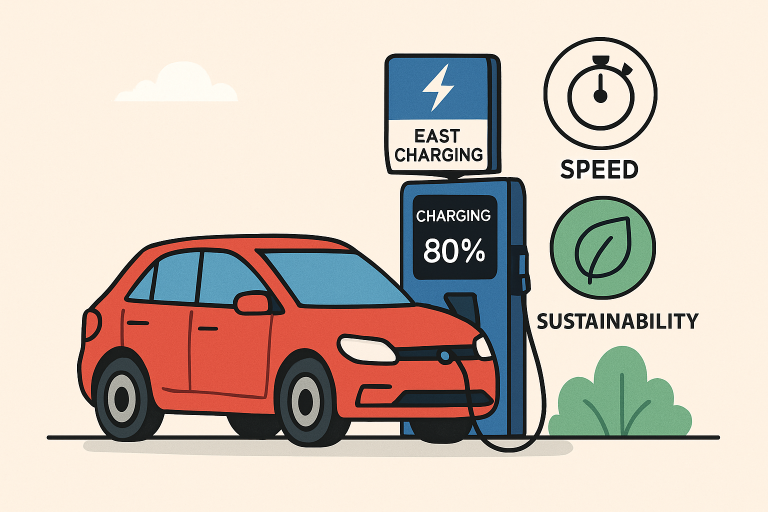
Advances in battery chemistry and power electronics are driving some of the most exciting breakthroughs in fast charging. Ultramodern fast-charging systems can now deliver power levels once unimaginable, allowing compatible vehicles to be charged in as little as 5 to 8 minutes. Innovations such as silicon carbide chipsets and improved lithium-iron phosphate (LFP) battery designs are making these charging speeds safe, efficient, and affordable for mass-market vehicles.
Emerging technologies are also achieving record charge speeds, with next-generation batteries able to top up from 10% to 80% in under five minutes. By using new electrode materials and improved heat management, these advancements are moving toward charging sessions that resemble a quick stop at a fuel pump, blurring the historic lines between the convenience of electric and combustion engines.
Role of Standardization in Speed
Rapid advancements also depend on universal charging standards. Efforts by groups to develop a global charging communication protocol (such as the Combined Charging System, or CCS) are helping ensure that any EV can use any public fast charger, making quick stops possible regardless of make or model.
Expansion of Charging Infrastructure
The scalability of public charging networks is a crucial factor in EV adoption. In the United States, the number of DC fast charging points is projected to reach nearly half a million by 2040, representing a multi-billion-dollar industry in its own right. Retailers, mall operators, and highway rest stops are partnering with charging providers to ensure chargers are available at logical, convenient sites, and new real estate developments are increasingly including charging capacity as a standard amenity. For a detailed view of current and planned charging stations, the U.S. Department of Energy provides an extensive map.
Strategic alliances between companies are making high-speed EV “pit stops” a reality for travelers. These collaborations focus on placing ultra-fast chargers in locations where people shop, dine, and socialize, transforming downtime into productive or relaxing moments while their vehicles recharge.
International Growth Trends
Charging infrastructure is expanding quickly in Europe and Asia as well, driven by ambitious national electrification goals and incentives. China and European countries have outpaced the U.S. in both the density and speed of publicly available DC charging, spurring global competitive acceleration.
Government Initiatives and Support
Federal and local governments are playing a vital role in reducing the cost and risk of building fast charging networks. In the U.S., the Bipartisan Infrastructure Law allocated $7.5 billion for EV charging infrastructure, with a portion dedicated to high-speed public chargers in urban and rural communities. Many states offer additional incentives to developers and businesses installing chargers, further accelerating the deployment of public fast charging where it’s needed most, from highways to underserved neighborhoods.
Challenges and Considerations
Despite impressive progress, challenges persist. The cost of ultra-fast charger installation remains high, especially for sites requiring significant utility upgrades. Electric grids in certain regions are under strain, and integrating high-speed charging requires careful coordination with utilities and local authorities. Consistent charger reliability is another pain point; even the best designs are only as helpful as their uptime and user experience.
Addressing Equity and Accessibility
Ensuring all drivers benefit from fast charging requires targeted deployment in historically underserved communities and rural areas. Programs to subsidize installations, along with public-private data sharing, will be essential to address these gaps and promote truly equitable EV adoption.
The Road Ahead
The future of fast charging for electric vehicles looks promising. Ongoing improvements in charging technology and battery performance, along with the expansion of charging networks and strong government incentives, are making EVs a practical and convenient choice for more drivers. As more people recognize the advantages of electric transportation and adopt it, the shift away from combustion engines will accelerate, bringing us closer to a zero-emission future. Success will depend on cooperation among automakers, charging providers, and policymakers to deliver a smooth, reliable charging experience. With continued innovation and investment, fast charging is poised to become as simple and accessible as filling up a traditional vehicle.
