

Introduction
The modern industrial sector is defined by its commitment to quality, reliability, and safety. These imperatives drive the adoption of sophisticated quality assurance techniques, among which pressure testing is vital. As industries strive to ensure the structural soundness and operational safety of their products, pressure testing companies are playing an increasingly important role in helping meet increasingly rigorous standards.
Pressure testing is not just about compliance. It represents an industry-wide dedication to preventing catastrophic failures and minimizing risk across oil and gas, aerospace, manufacturing, and other vital sectors. As innovation accelerates and digitalization transforms the factory floor, pressure testing has also evolved in remarkable ways. Companies now expect not only safer and more accurate results but also greater efficiency and reliability in their quality testing routines.
The Importance of Pressure Testing
Pressure testing is essential for ensuring the safety, reliability, and longevity of parts and assemblies. By verifying that vessels, pipes, and other components can withstand anticipated pressures during real-world operation, businesses protect both end users and critical infrastructure. Without thorough pressure testing, leaks or ruptures could compromise equipment performance and worker safety, leading to injuries, unplanned shutdowns, and significant financial losses.
Each pressure test is designed to detect weak spots, identify manufacturing defects, and confirm that each item fulfills all necessary requirements before it is ever put into service. This step is regarded as indispensable for compliance with building codes, safety regulations, and global trade standards. For those operating in sensitive fields such as aerospace or medical device manufacturing, consistent pressure integrity is not negotiable; it is an expectation.
Technological Advancements in Pressure Testing
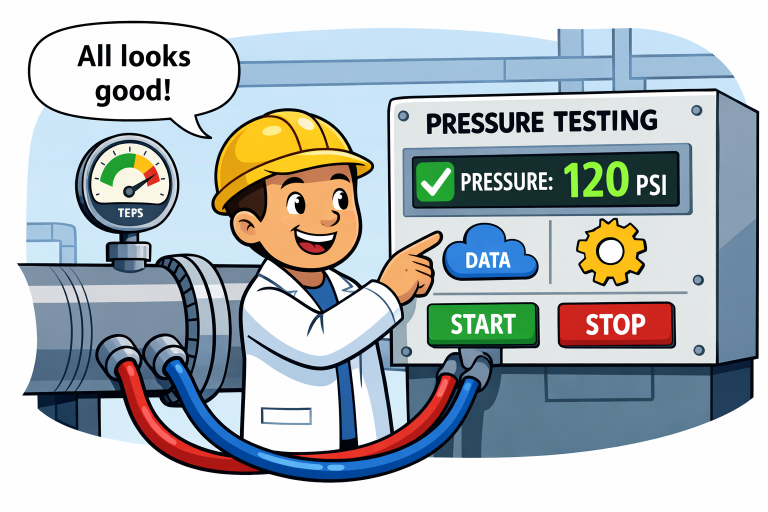
As demand for more stringent quality control grows, industrial stakeholders are turning to innovative pressure testing systems that go beyond conventional manual gauges and charts. Modern equipment features robust digital interfaces, automated data logging, cloud connectivity, and remote monitoring options. These tools record each testing cycle in real time, increasing accuracy and data traceability while reducing the risk of human error. Automated control systems can also perform complex pressure profiles and generate detailed reports without operator intervention.
The shift towards automation has made pressure testing not just faster but also more reliable. Sophisticated sensors and software solutions are enabling predictive maintenance and real-time analysis, while also streamlining regulatory compliance reporting. This technological leap ensures greater consistency across every test and increases competitiveness as customer and regulatory expectations continue to rise. For more information about advancements in smart manufacturing and automation, visit Forbes.
Industry Applications of Modern Pressure Testing
A wide spectrum of industries depend on advanced pressure testing to safeguard end users, reduce warranty claims, and enhance product reputation. In steel pipe manufacturing, for instance, cutting-edge pressure test systems help manufacturers verify the strength and sealing capacity of each pipe section before release, thereby minimizing the risk of failures in critical pipelines.
In the packaged goods and food and beverage industries, evolution in pressure testing allows producers to easily detect leaks or weaknesses in cans, bottles, and sealed packaging. Enhancements in digital monitoring give companies a better chance to optimize production, uphold product integrity, and protect brand reputation in a fiercely competitive marketplace.
Compliance with International Standards
Adherence to international standards is fundamental for manufacturers aiming for a seamless presence in the global market. Pressure testing equipment and procedures are aligned with established benchmarks, such as API 5L for line pipes, ASTM standards for carbon-steel applications, and other industry-specific protocols. Compliance with these frameworks does not just ensure product integrity; it also builds consumer trust and enables easier navigation of cross-border regulations.
By supporting the integrity of certification and assuring systematic quality control, pressure testing is an anchor for competitive differentiation and market access. Companies found noncompliant may face costly recalls, legal penalties, and long-term damage to their reputations. Detailed industry discussions about safety standards and testing benchmarks can be explored further at MAXPRO Technologies.
Future Trends in Pressure Testing
The future landscape of pressure testing is shaped by the expansion of Industry 4.0, marked by the integration of the Internet of Things (IoT), artificial intelligence, and connected systems. IoT-enabled testers transmit live performance and health data to centralized control rooms, allowing for instant alerts, preventive maintenance, and reduced downtime. This not only maximizes uptime but also provides predictive insights to manufacturers for smarter operational planning.
Next-generation pressure test machines are being engineered to withstand ultrahigh pressures for use in advanced energy research, space exploration, and specialized construction. Enhanced automation enables fully unattended testing cycles, while built-in analytics ensure every result is captured and actionable in real time. These trends are set to redefine how industries manage risk, productivity, and compliance in increasingly demanding environments.
Conclusion
The evolution of pressure testing matters on a global scale. As industries push technological boundaries, advancements in testing technologies are central to maintaining product safety, market access, and overall quality. Embracing modern pressure testing solutions, characterized by digital integration, automation, and rigorous compliance with standards, enables companies to stay ahead of regulations, prevent costly failures, and foster trust in their products for years to come.
