


A layered bedroom should feel inviting at the end of a long day, not like a display that is too precious to use. In Scottsdale, Arizona, that often means balancing desert-warm outdoor temperatures with cooler indoor temperatures from air conditioning. The most successful bedrooms combine adaptable bedding, softened light, and a simple visual plan that feels settled in every season. For homeowners comparing textiles and finishes, Egyptian cotton Scottsdale, Arizona, is a useful starting point through Del Adora, a Scottsdale showroom focused on luxury linens, bedding, bath accessories, decorative accents, and custom furnishings. Its in-store and in-home design assistance can help local shoppers consider fabric samples, scale, window treatments, and the coordination of an entire room, rather than selecting each bedding piece in isolation.
Why Comfort Should Come Before Bedroom Trends
A beautiful bedroom still falls short if the sheets feel uncomfortable, the lighting is harsh, or the bed takes too long to remake. Begin with the details used every day: mattress support, pillow preference, bedding weight, room temperature, and clear walking space around the bed. These choices have more influence on how a room feels than a short-lived color trend. A timeless look does not require buying a perfectly matched set. Instead, choose fewer pieces that earn their place through comfort, durability, or flexibility. A neutral duvet cover can remain in place for years, while a throw, pillow cover, or small lampshade can change as your taste changes.
Start With the Bed’s Basic Layers
Each layer should have a job. When every piece serves comfort, warmth, protection, or daytime polish, the bed looks intentional without becoming bulky.
- Mattress protector: Creates an additional washable barrier between the sleeper and mattress.
- Fitted sheet: Choose a depth that fits the mattress securely, including any topper.
- Top sheet: A lighter layer for people who prefer separation between themselves and a blanket or duvet.
- Blanket, quilt, or coverlet: Adds adjustable warmth and texture.
- Duvet or comforter: Supplies the main insulation layer when more warmth is needed.
- Throw and accent pillows: Add personality, but they should be easy to remove at bedtime.
Choose Fabrics for Real Life
No single fiber works for every sleeper. Cotton is widely available in many weaves and weights. Linen has a relaxed, textured look and a breathable feel. Silk is smooth and lightweight but commonly needs more careful laundering. Wool blankets can provide warmth and tactile interest. Microfiber is often easy to care for, although some sleepers may find it warmer. Bamboo-derived fabrics can feel soft, but shoppers should read the fiber label and care instructions closely.
In Scottsdale bedrooms, flexible layering is especially useful. A light blanket and duvet cover can be easier to adjust than a very heavy comforter. Check fabric content, weave, weight, shrinkage notes, and washing instructions before purchasing. Terms such as “luxury” or “hotel quality” do not explain how a sheet will feel after repeated washing.
Look Beyond Thread Count
Thread count is only one detail. Fiber quality, yarn construction, weave, fabric weight, and finishing also affect the hand feel and performance of sheets. Percale typically has a crisp feel; sateen is smoother with a subtle sheen; jersey is soft and knit-like; flannel is brushed for warmth; and linen has visible texture. When possible, touch a sample before committing to a full set.
Build a Calm Palette and Texture Plan
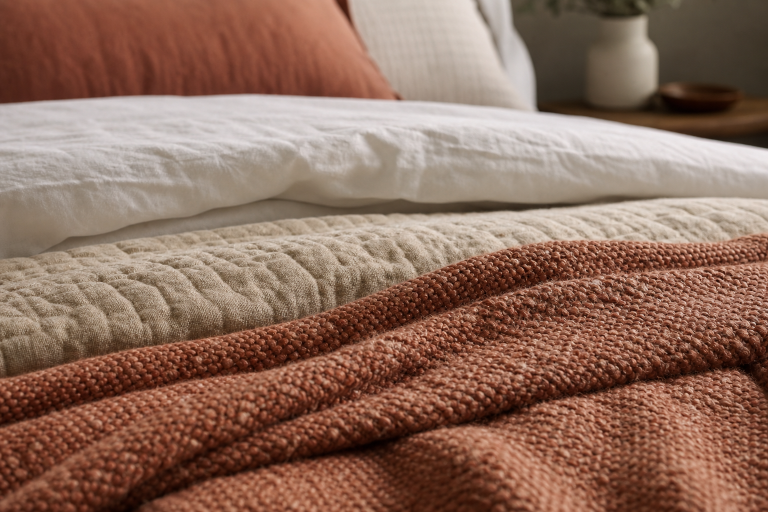
Use one base shade, such as warm white, sand, pale gray, muted blue, or soft clay. Then add one supporting color through a quilt, lumbar pillow, or throw. Repeating that supporting color in two or three places can make the room feel connected without making it overly coordinated. A simple texture rule prevents visual clutter: choose one dominant texture, one supporting texture, and one small accent texture. For example, pair smooth cotton sheets with a lightly quilted coverlet and a woven throw. Keep stronger patterns within the same color family, and remove decorative pieces that are never used or only create extra laundry.
Make the Bedroom Work for Everyday Routines
Before adding another layer, ask practical questions. Can it be washed at home? Does the duvet fit the mattress and bed frame proportionately? Will pets, children, allergies, or mobility needs affect the choice? Does the sleeper run warm, cold, or both during the night? A polished room is easier to maintain when the bedding stays in place, and the cleaning routine is realistic. Air quality and moisture management matter, too. The U.S. Environmental Protection Agency recommends controlling moisture and keeping indoor humidity below 60 percent, ideally between 30 and 50 percent, as part of a broader approach that includes source control and ventilation. In a bedroom, fully drying bedding, watching for musty odors, and keeping vents unobstructed are practical habits that support that goal. Managing humidity and air circulation can be particularly important when a room stays closed for long periods.
Use Lighting and Window Treatments to Settle the Room
One bright overhead fixture rarely creates the most restful atmosphere. Combine general lighting with bedside lamps and a softer accent light where appropriate. Dimmers can help a room move from daytime tasks to evening wind-down without changing the entire fixture. Window treatments also do more than decorate. Curtains, shades, or a layered combination can add privacy, soften hard surfaces, and help control early light. Choose textiles that relate to the bedding palette, but avoid making every surface the same color or pattern.
A Simple Scottsdale Bedroom Refresh Plan
- Remove worn, unused, or difficult-to-clean bedding.
- Inspect the mattress protector, pillows, and fitted sheet.
- Select one calming base color for the bed.
- Add one useful texture through a quilt, coverlet, or blanket.
- Add a single accent with a throw or a pair of pillows.
- Improve bedtime lighting with a lamp or dimmer.
- Keep only the layers that fit your climate and laundry routine.
Common Questions About Layered Bedroom Design
How many bedding layers are enough?
For many bedrooms, three to five useful layers are plenty. More can add visual weight without increasing comfort.
What works well for hot sleepers?
Try breathable sheets, a lighter blanket, and a duvet that can be folded back or removed. Consider the whole sleep environment, including airflow, mattress materials, and room temperature.
How can a small bedroom feel more luxurious?
Use properly fitted bedding, keep surfaces clear, add soft bedside lighting, and choose one or two confident textures instead of many small accessories. A restrained palette often makes a compact room feel calmer and more considered.
Conclusion
A calm, layered bedroom in Scottsdale does not require a complete redesign or an overly complicated decorating plan. Start with comfortable basics that suit the room and your daily routine, then select bedding, curtains, rugs, and accent fabrics that complement your household’s needs and the warm desert setting. Add only the layers you will actually use so the space remains comfortable rather than cluttered, and consider textures that create warmth without making the room feel heavy. A thoughtful lighting plan can also make a major difference, with softer bedside and ambient lighting creating a more relaxing atmosphere at night. By balancing comfort, texture, function, and personal style, homeowners can create a bedroom that feels polished and inviting while remaining practical, personal, and genuinely restful.
