


Home improvement projects require homeowners to place considerable trust in contractors. A homeowner may pay a deposit weeks before materials arrive, allow workers into the property, and make progress payments before the finished result can be evaluated.
Most projects involve some changes or delays. Weather affects exterior work, materials can arrive late, and opening a wall may reveal damage that was invisible during the original estimate. These complications become disputes when communication stops, costs change without approval, work remains unfinished, or the completed project differs significantly from the written agreement.
When that happens, sending increasingly frustrated messages rarely creates a solution. A homeowner needs to establish what was agreed, document the current condition of the property, and make a clear request supported by records.
Review the Agreement Before Using a Demand Letter Generator
Start with the contract, proposal, estimate, and any written changes approved during the project.
The documents should identify:
- The contractor and homeowner
- The property address
- The agreed scope of work
- Materials or product specifications
- The project price
- Deposit and progress-payment amounts
- Expected start and completion dates
- Procedures for approving changes
- Warranty terms
- Cancellation and dispute provisions
Some projects begin with a detailed contract. Others rely on a short estimate followed by text messages about scheduling and materials. Collect all relevant communication, even when the agreement appears informal.
Compare the written scope with the work that has actually been completed. A delay may have a documented explanation, while an abandoned project may show weeks of missed appointments and unanswered messages. Keeping these situations separate helps the homeowner describe the problem accurately.
The homeowner should also check whether the contract requires formal notices to be sent to a particular address or by a particular delivery method.
Document the Condition of the Project
Take clear photographs and videos before another contractor changes, removes, or repairs the disputed work. Capture wide views showing the location of the problem and close-up images showing relevant details.
Record the date and add a short description to each file. Useful documentation may include:
- Areas where work has stopped
- Materials left at the property
- Damage that appeared during construction
- Fixtures or products that differ from the agreement
- Work that appears incomplete
- Safety or weather-exposure concerns
- Items that the contractor removed from the property
Create a simple project timeline. Include the contract date, payments, scheduled work, actual visits, changes, missed appointments, complaints, and responses.
Homeowners should preserve original photographs and messages. Editing images, adding marks directly to the only copy, or saving isolated screenshots can remove useful context. Make separate annotated copies if arrows or notes are needed.
Check the Payment History
A contractor dispute often involves several payments rather than one final invoice. Review bank records, card statements, checks, receipts, and payment-app confirmations.
Match each payment to the purpose stated in the agreement. Was the deposit intended to reserve a date, purchase materials, or begin work? Was a progress payment due after a specific milestone? Did the homeowner pay for a change that was never completed?
Prepare a short payment table listing:
- Payment date
- Amount
- Payment method
- Stated purpose
- Related project milestone
- Supporting receipt or record
This makes it easier to calculate the amount being disputed. The homeowner may seek completion of the work, correction of defective work, return of an unused deposit, reimbursement for specific repairs, or another defined resolution. The requested amount should have a clear basis.
Avoid guessing the cost of repairs. If another professional must complete or correct the work, request a written estimate that identifies the necessary tasks and expected cost.
Give the Contractor a Clear Opportunity to Respond
Before escalating the matter, send a concise written notice describing the issue. Refer to the relevant part of the agreement and identify the work that remains incomplete or needs attention.
The message should ask the contractor to respond by a specific date. Depending on the situation, the homeowner may request:
- A confirmed return date
- A written completion schedule
- Replacement of incorrect materials
- Repair of identified defects
- An explanation of disputed charges
- Return of a deposit
- Another specific remedy
Keep the tone factual. Avoid posting accusations online while the dispute is still developing, as public arguments can distract from the underlying contract issue.
If the contractor responds with a practical plan, confirm it in writing. State the new dates, responsibilities, and payment terms. Save every revised agreement with the original project records.
Prepare a Formal Request With a Demand Letter Generator

A formal demand may be appropriate when the contractor ignores the final notice, repeatedly misses new deadlines, refuses to address the problem, or has clearly left the project unfinished.
The letter should summarize the agreement, payments, work completed, unresolved issues, previous attempts to communicate, and the resolution requested. It should provide a reasonable deadline and explain the next step the homeowner is considering.
A homeowner who needs help organizing the document can use a free demand letter generator to answer guided questions and create a draft based on the supplied facts. Every statement in the draft should be checked against the contract and project records before the letter is sent.
Review the following carefully:
- Correct legal names and addresses
- Contract and payment dates
- The amount paid
- The work promised and completed
- The specific remedy requested
- Any referenced laws or regulations
- The response deadline
- The proposed next action
Legal requirements differ by state and by type of project. Licensing rules, required contract terms, notice procedures, warranty rights, and filing deadlines may all affect the homeowner’s options. A generated letter should be treated as a document for review, and homeowners should seek legal advice when the matter involves substantial losses, structural risks, liens, insurance claims, or complex contract terms.
Preserve the Letter and Delivery Information
Keep an exact copy of the final letter and every attachment. Record when, where, and how it was sent.
Depending on the contract and local requirements, relevant delivery records may include:
- Certified or tracked mailing receipts
- Delivery confirmation
- Email transmission details
- Acknowledgment from the contractor
- Returned mail
- Follow-up responses
Proof that a letter was drafted has limited value if there is no record showing which version was sent or whether it reached the intended recipient.
Continue updating the timeline after delivery. Record the response deadline, any reply, additional site visits, refund offers, new promises, and further damage or expenses.
Organize Small Claims Evidence Before Taking Further Action
If the demand does not resolve the dispute, the homeowner may consider a licensing complaint, mediation, an insurance claim, small claims court, or legal counsel. The right path depends on the contract, amount, location, contractor status, and nature of the damage.
Before choosing a next step, organize the material so that each document supports a specific fact.
A small claims evidence workspace can help connect the contract, payment records, messages, photographs, estimates, and notices to a chronological case record. This is especially useful when a project has generated months of communication across email, text messages, payment platforms, and paper documents.
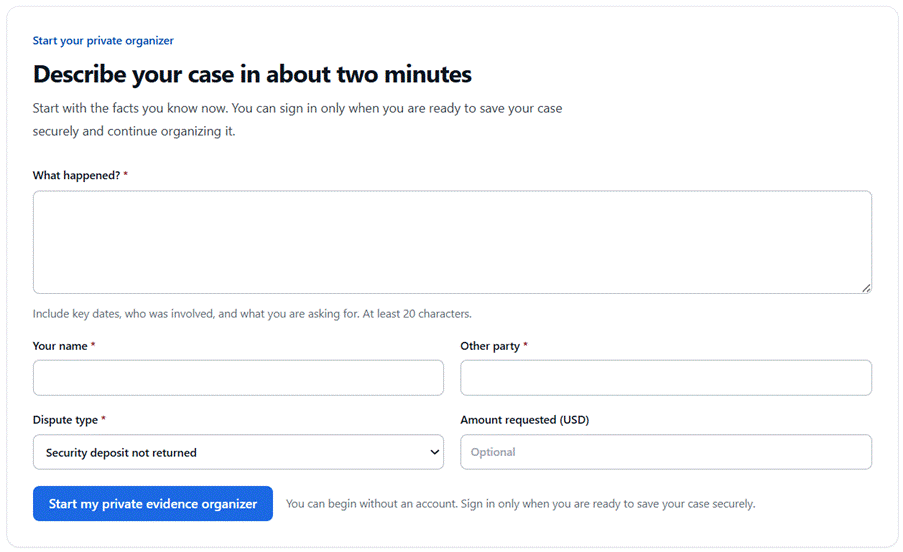
A practical file may include:
- A one-page project timeline
- The signed contract or accepted estimate
- Approved change orders
- Proof of every payment
- Before, during, and after photographs
- Messages about scheduling, delays, and complaints
- Written estimates for corrective work
- The final demand and delivery record
- Contractor responses
- A calculation of the requested amount
Homeowners should confirm the current rules of the appropriate court before filing. Small claims limits, filing locations, service procedures, required copies, and methods for presenting photographs or electronic messages vary by jurisdiction.
Use Small Claims Evidence Lessons to Reduce Risk on the Next Project
A difficult experience can reveal where the original project controls were weak.
For future work, homeowners can:
- Verify licensing and insurance where applicable
- Request a written scope with material specifications
- Avoid paying the full price before completion
- Connect progress payments to visible milestones
- Require written approval for changes
- Photograph the property before work begins
- Keep invoices, receipts, warranties, and product information
- Confirm who will obtain permits
- Add a procedure for reporting and correcting defects
- Record final acceptance in writing
Large deposits increase the homeowner’s exposure before work begins. A milestone schedule can balance the contractor’s need to purchase materials with the homeowner’s need to confirm progress.
Verbal changes also create uncertainty. Even a small revision should identify the new work, price, schedule effect, and person approving it.
Keep the Dispute Focused on a Verifiable Resolution
A home improvement dispute can feel personal because it affects the place where someone lives. The practical response begins with documents: the agreement, payment history, project condition, communications, and requested solution.
A clear timeline helps the homeowner explain the issue. A focused notice gives the contractor an opportunity to respond. If formal action becomes necessary, organized records make it easier to evaluate the available options.
This approach cannot guarantee a particular result, but it helps homeowners make decisions based on evidence and keep the dispute centered on a specific, supportable resolution.
This article provides general information and does not constitute legal advice. Home improvement laws, contract rights, and dispute procedures vary by jurisdiction and individual circumstances.
